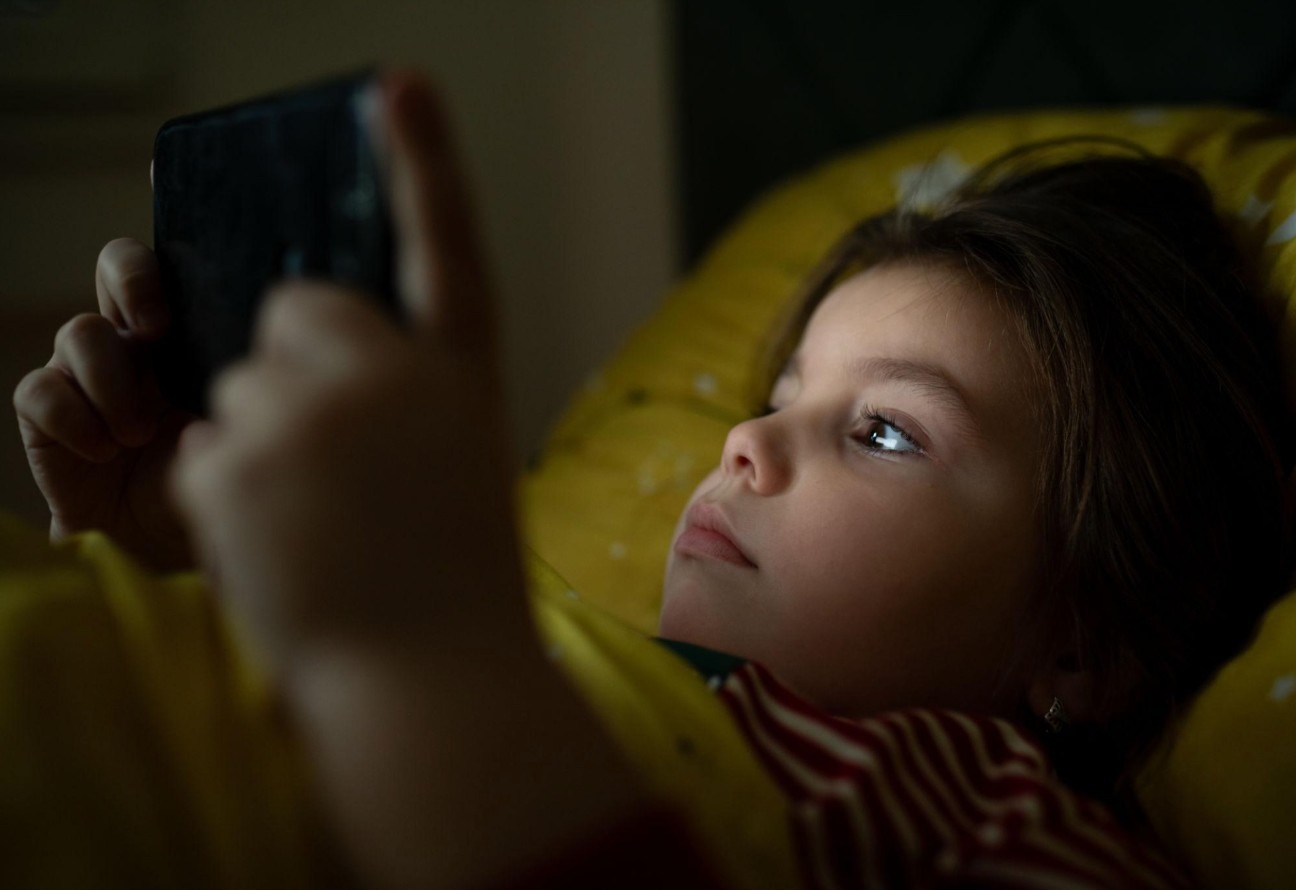
Small Humans, Big World: Parenting Through Modern-Day Fears
There is a moment, often quiet and unremarkable, when the weight of raising a child in today’s world settles in. It does not arrive with drama. It shows up while scrolling through headlines, overhearing a conversation, or watching your child navigate something that did not exist when you were their age. It is less a single fear and more a steady awareness that the landscape has shifted.
Parenting has always required a certain tolerance for uncertainty. What feels different now is not the presence of fear, but its shape. It is broader, less defined, and sometimes harder to name. The world children are growing up in is expansive in ways that are both remarkable and, at times, unsettling.
And yet, despite all of this, parenting still unfolds in ordinary moments. Packed lunches. Bedtime routines. Repeated reminders about shoes, homework, and basic hygiene. The extraordinary and the everyday now coexist in ways that can feel both grounding and disorienting.
The Fear You Cannot Quite Explain
Some fears are easy to articulate. You want your child to be safe, to avoid harm, to make good decisions. These concerns are familiar and, in many ways, timeless. But there is another category of fear that feels more abstract.
It is the concern that your child will encounter something you do not fully understand. Not necessarily something dangerous in the traditional sense, but something influential. A message, an expectation, or a standard that quietly reshapes how they see themselves or others.
The modern world offers constant exposure. Information is immediate, opinions are plentiful, and boundaries are less clear than they once were. A child no longer needs to seek out influence. It finds them.
This creates a particular kind of unease. Not panic, but vigilance. The awareness that guidance now extends beyond physical spaces into environments that are less visible and harder to monitor. It requires a shift from simply protecting children to actively helping them interpret what they encounter.
There is also the subtle fear of misinterpretation. That something said with good intention will be understood differently. That silence will be filled in by voices you would not have chosen. That your child will absorb ideas without context and carry them forward as truth.
It is not about control. It is about presence. About staying engaged enough to offer perspective, even when the conversation feels unfamiliar or, at times, slightly out of reach.
Growing Up Faster Than Expected
There is a quiet acceleration to childhood now. It does not always announce itself, but it is noticeable if you pay attention. Interests shift quickly. Awareness develops earlier. Conversations that once belonged to later stages of life appear sooner than expected.
Part of this comes from access. Children are exposed to a wider range of ideas, experiences, and viewpoints at an earlier age. This can be enriching. It can also be overwhelming.
The line between childhood and adolescence feels less distinct. Milestones blur. The gradual unfolding that many parents remember from their own upbringing has, in some ways, been replaced by a more compressed timeline.
This creates a tension. You want to preserve the simplicity of childhood while also preparing your child for the realities they are already encountering. You want them to remain curious without becoming cynical. To be informed without feeling burdened.
There is also the awareness that comparison begins early. Children are not just navigating their immediate environment. They are, at times, measuring themselves against a broader, often curated version of the world.
The concern is not that they will compare. That is part of human nature. It is that the comparisons may lack context. That they will see outcomes without understanding the process behind them. That they will internalize standards that were never meant to be universal.
This is where the work becomes more nuanced. It is not about eliminating exposure, which is neither realistic nor necessarily beneficial. It is about building a framework through which your child can interpret what they see.
That framework is not built in a single conversation. It develops over time, through small, repeated interactions. Through questions, clarifications, and, occasionally, the willingness to admit that you do not have all the answers.
Trying to Keep Up While Staying Grounded
One of the more understated challenges of modern parenting is the sense of always trying to keep up. New platforms emerge. Language evolves. Cultural references shift quickly. By the time something becomes familiar, it is already being replaced.
This can create a feeling of being slightly outpaced in a role that traditionally relied on experience. It requires a degree of adaptability that was not always necessary before.
At the same time, there is a risk in focusing too heavily on keeping up. The constant pursuit of relevance can become exhausting, and, in some cases, distracting. Not every trend requires participation. Not every development requires immediate mastery.
There is value in recognizing what remains constant. Children still benefit from attention, consistency, and clear boundaries. They still respond to being heard, understood, and supported.
The challenge, then, is finding balance. Staying informed enough to engage meaningfully, while remaining grounded enough to provide stability. Accepting that you will not always be current, but that you can still be present.
There is also a certain humility involved. Acknowledging that your child’s experience of the world will differ from your own. That they will navigate spaces you did not encounter. That, at times, they may even guide you through aspects of their reality.
This does not diminish your role. It reshapes it.
Guidance becomes less about having all the answers and more about helping your child develop the ability to ask thoughtful questions. To evaluate information. To form their own understanding while remaining open to revision.
In many ways, this is a more complex task, but also a more meaningful one.
Holding Onto What Matters
For all the new fears, there are still anchors. Small, steady points that remain unchanged. The way a child seeks reassurance without necessarily asking for it. The way they test boundaries, not to challenge authority, but to understand where they stand.
There is comfort in these consistencies. They serve as a reminder that while the context has evolved, the fundamental nature of childhood has not disappeared.
Children still look to the adults in their lives for cues. Not just in what is said, but in how situations are handled. How uncertainty is approached. How challenges are navigated.
This places less emphasis on perfection and more on modeling. Demonstrating how to engage with a complex world without becoming overwhelmed by it. Showing that it is possible to acknowledge fear without allowing it to dictate every decision.
There is also space for perspective. Not every concern will materialize into a problem. Not every unknown needs to be resolved immediately. Some uncertainty is simply part of the process.
Raising a child has never been about eliminating risk entirely. It has always involved preparing them to move through it with awareness and resilience.
The modern world may introduce new variables, but it also offers new opportunities. Access to information, diverse perspectives, and tools for connection that previous generations did not have.
The task is not to shield children from this reality, but to equip them to engage with it thoughtfully.
And perhaps that is where the focus can rest. Not on the impossibility of controlling every outcome, but on the possibility of shaping how a child approaches the world they are growing into.
Because despite the noise, the pace, and the complexity, there are still moments that cut through it all. A question asked with genuine curiosity. A small act of kindness. A laugh that arrives unexpectedly and lingers longer than it should.
These moments do not eliminate the fear. They coexist with it. They offer balance.
And in the end, that balance may be what makes modern parenting not just manageable, but meaningful.